Argentina’s LNG Opportunity
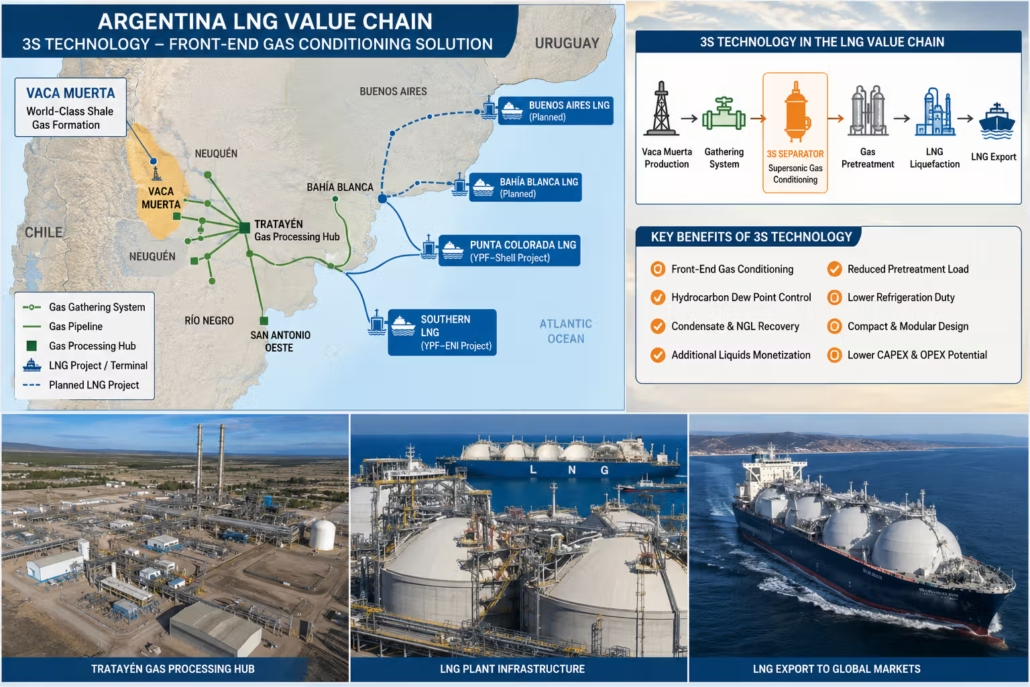
Vaca Muerta LNG Gas Conditioning is becoming a critical component of Argentina’s strategy to develop world-scale LNG export infrastructure. As production from the Vaca Muerta shale formation continues to grow, LNG developers are seeking innovative technologies that can improve feed gas quality, reduce processing costs, and maximize hydrocarbon recovery.
Argentina is rapidly positioning itself as a future LNG export powerhouse. Supported by the vast unconventional resources of the Vaca Muerta shale formation, several LNG developments are progressing toward commercialization, including projects led by YPF, Shell, Eni, Southern Energy, Pan American Energy, Harbour Energy, and other strategic partners.
As production continues to grow, LNG developers face a common challenge: how to efficiently condition natural gas before it enters expensive liquefaction facilities.
Gas conditioning is a critical step in the LNG value chain. Removing condensates, controlling hydrocarbon dew point, recovering valuable natural gas liquids (NGLs), and reducing pretreatment loads can significantly improve LNG project economics.
This is where 3S Technology offers a compelling opportunity.
Why Vaca Muerta LNG Gas Conditioning Matters
Efficient Vaca Muerta LNG Gas Conditioning can significantly improve LNG feed gas quality while reducing pretreatment requirements.
The gas produced from Vaca Muerta increasingly contains valuable hydrocarbon liquids, including condensate, propane, butane, and natural gasoline. Recent investments by operators and midstream companies demonstrate a growing focus on NGL recovery, gas processing expansion, and LNG export infrastructure.
As LNG export projects move toward final investment decisions, feed gas quality becomes increasingly important. LNG facilities require stable and properly conditioned gas streams to maximize operational efficiency and reduce energy consumption.
Traditional gas conditioning systems often rely on multiple stages of mechanical separation, refrigeration, dehydration, and hydrocarbon recovery. While effective, these systems can require significant capital investment, larger footprints, and increased operating costs.
3S Technology provides a new approach to Vaca Muerta LNG Gas Conditioning through supersonic gas separation.
How 3S Technology Works
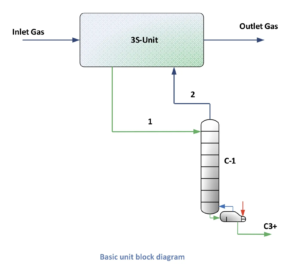
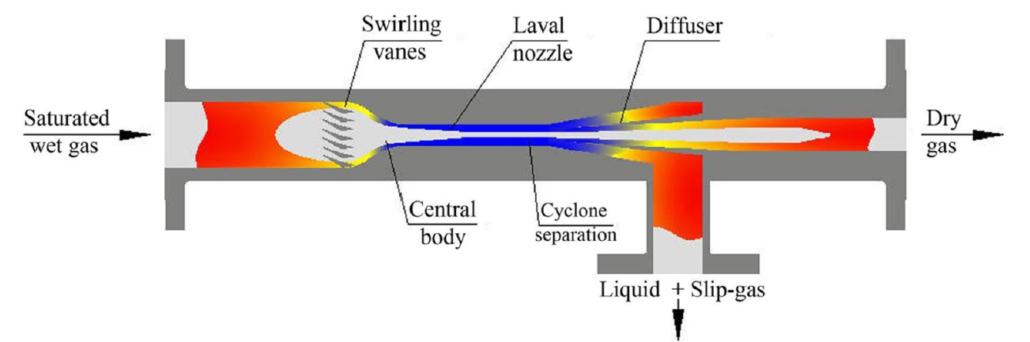
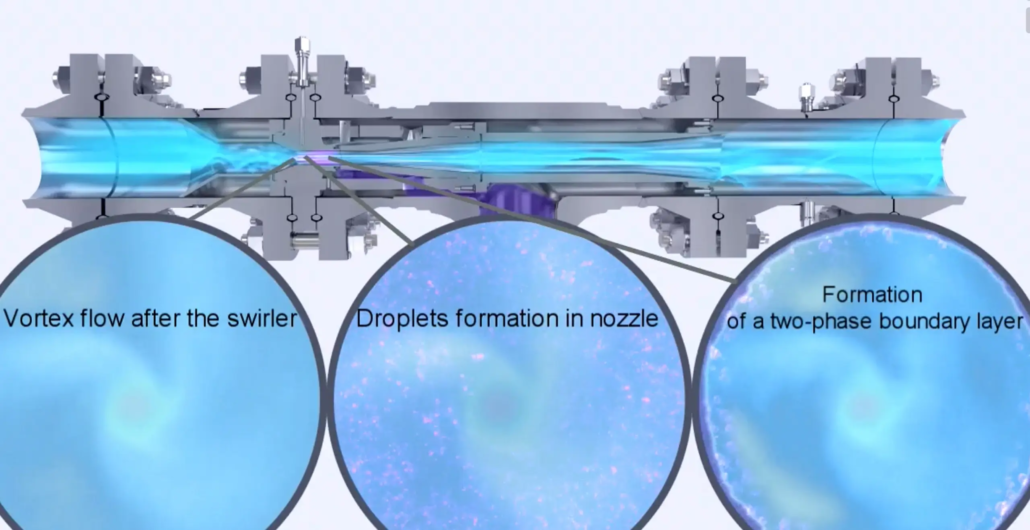
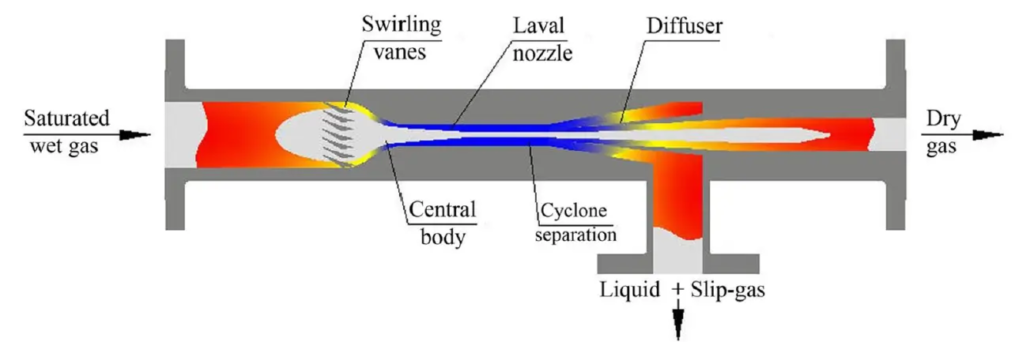
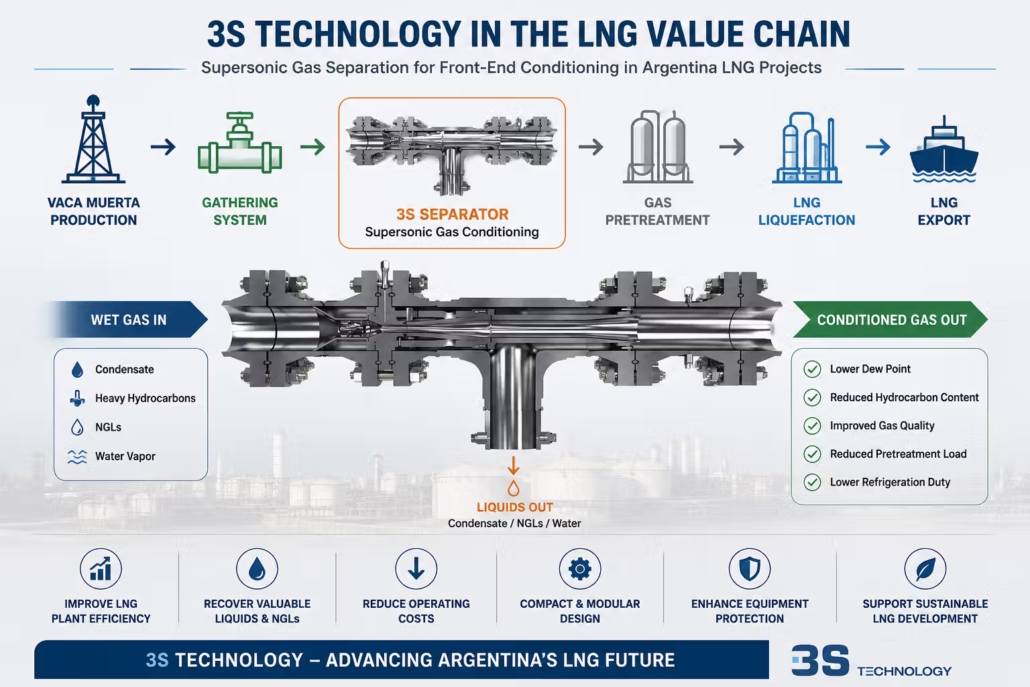
3S Technology is based on supersonic gas separation principles. Natural gas is accelerated through a specially engineered nozzle, creating rapid pressure and temperature reduction. These conditions promote the condensation of water, condensates, and heavier hydrocarbon fractions.
The resulting liquid phase is separated from the gas stream, allowing valuable hydrocarbons to be recovered while simultaneously improving gas quality.
Unlike conventional refrigeration-based solutions, 3S Technology utilizes the energy available within the gas stream itself, creating opportunities for compact and modular installations with fewer moving parts.
3S Technology in the Argentina LNG Value Chain
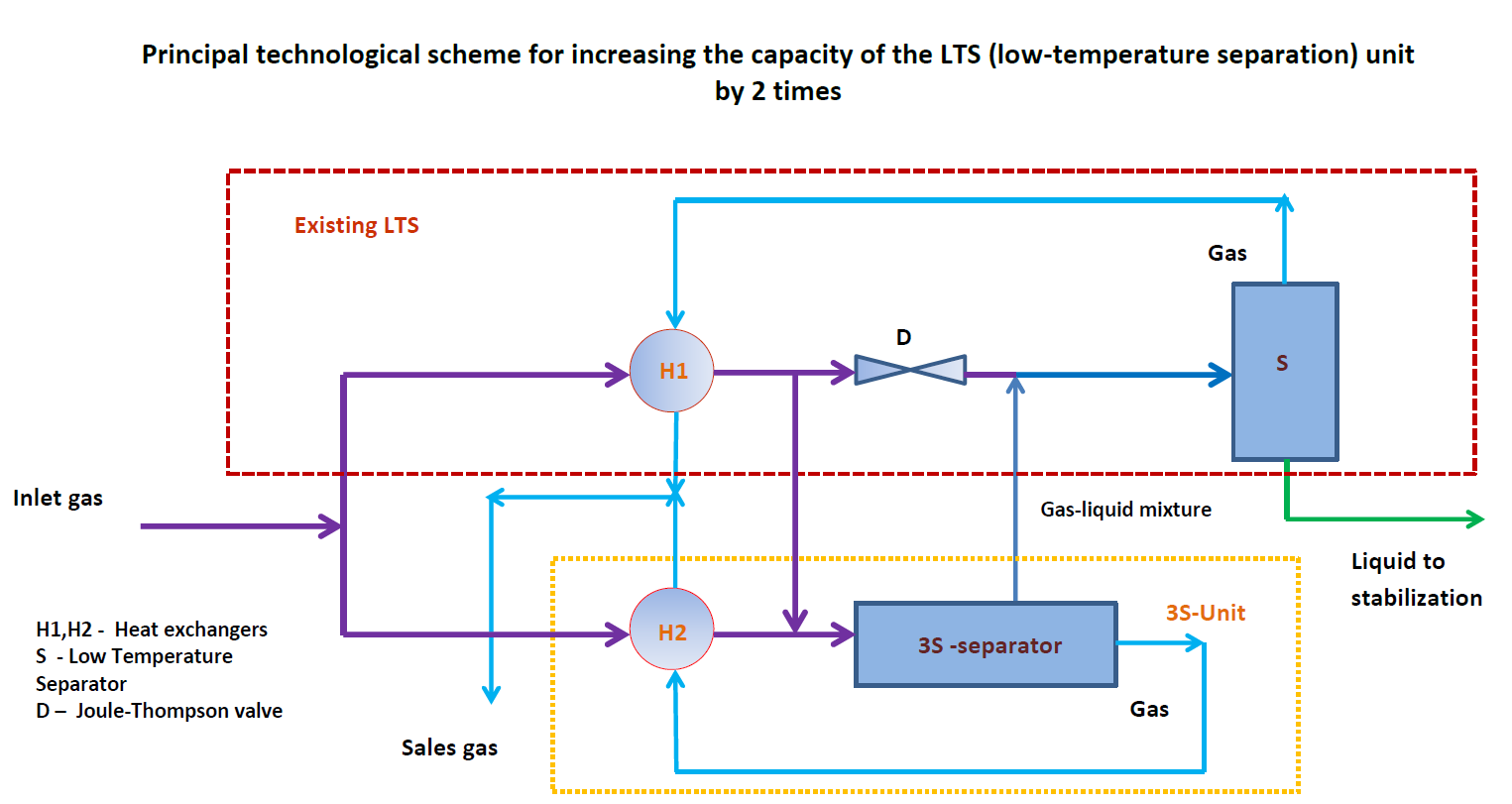
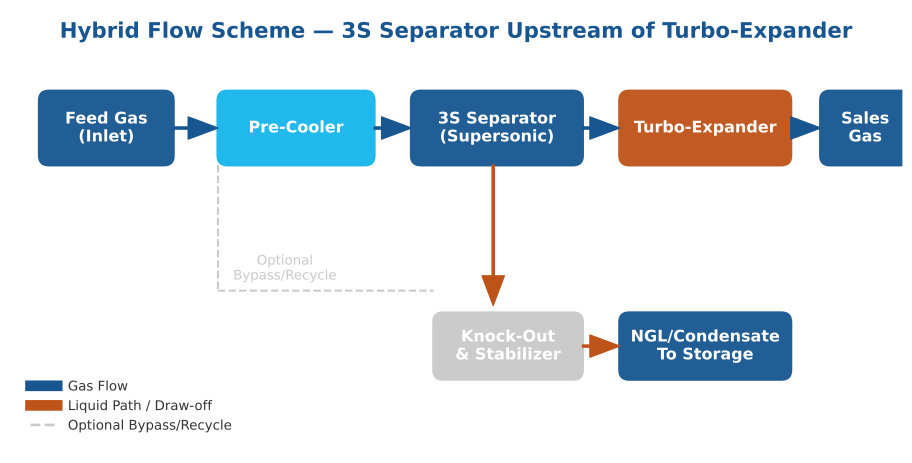
A potential integration point for 3S Technology is upstream of conventional LNG pretreatment systems.
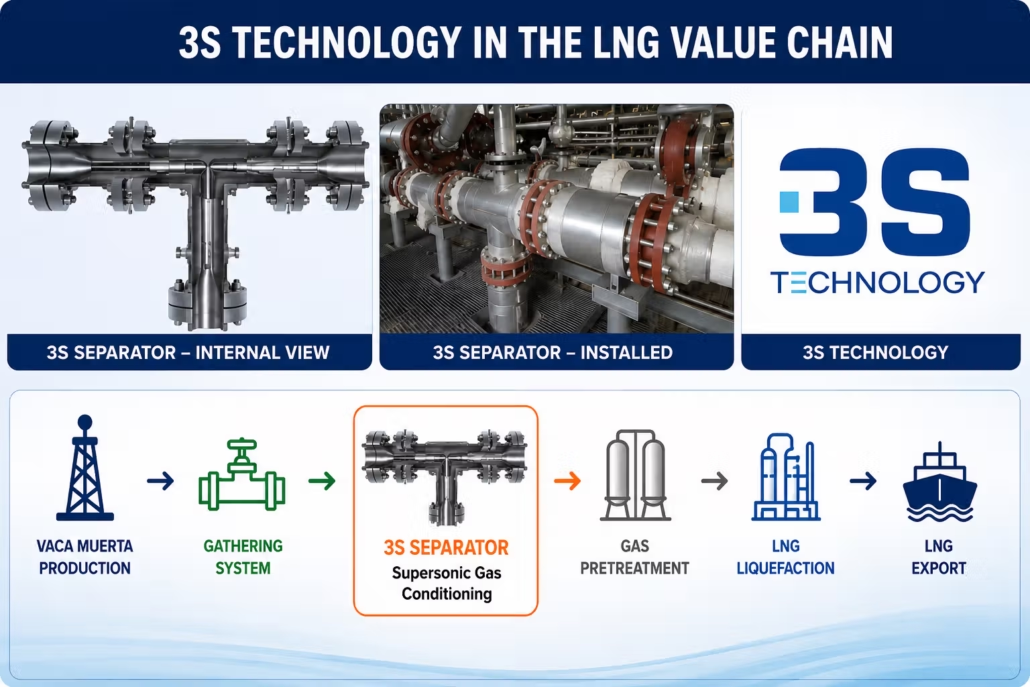
Vaca Muerta Production → Gathering System → 3S Separator → Gas Pretreatment → LNG Liquefaction → LNG Export
In this configuration, the 3S Separator performs front-end gas conditioning before the gas enters the pretreatment and liquefaction process.
Potential benefits include:
• Removal of condensate and free liquids
• Hydrocarbon dew point control
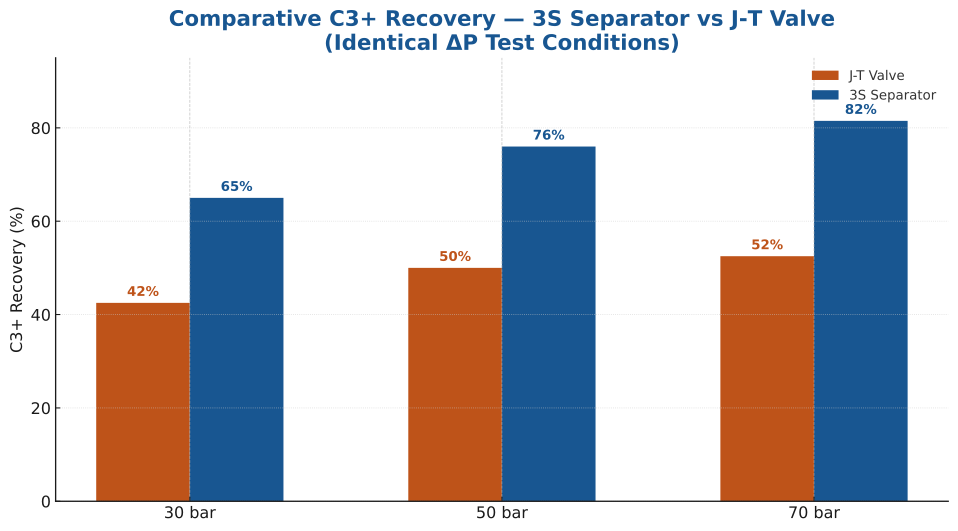
• Additional NGL recovery
• Reduced pretreatment load
• Improved LNG feed gas quality
• Reduced refrigeration duty
• Enhanced operational flexibility
Condensate and NGL Recovery Opportunities
One of the most attractive aspects of implementing 3S Technology is the ability to recover valuable hydrocarbon liquids before the LNG process.
As Vaca Muerta gas streams become richer, operators have increasing opportunities to monetize:
- Condensate
- Natural gasoline
- LPG components
- Valuable NGL streams
Recovering these products upstream can create additional revenue while simultaneously improving LNG plant performance.
Supporting Vaca Muerta LNG Infrastructure
Vaca Muerta LNG Gas Conditioning
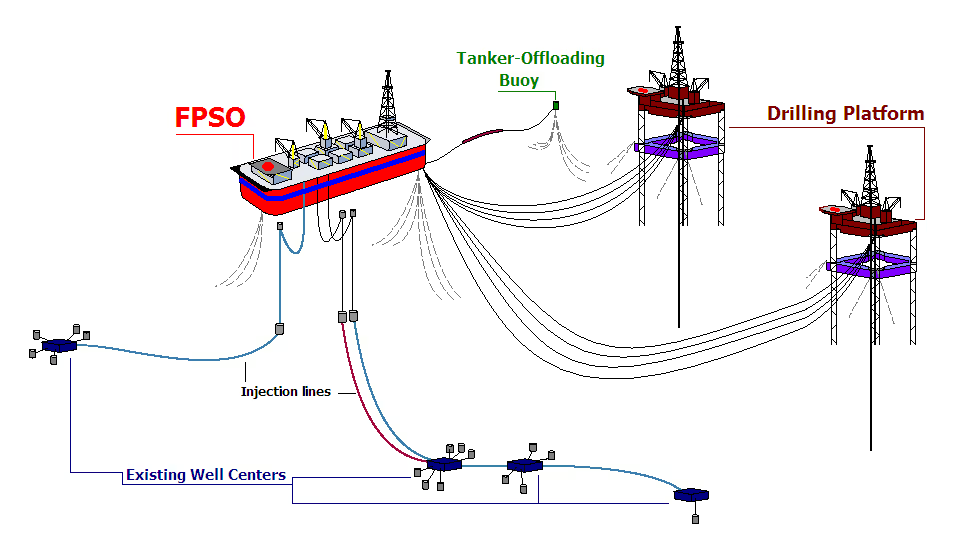
Argentina’s LNG vision relies on large-scale infrastructure development, including gathering systems, gas processing plants, pipelines, export terminals, and floating LNG facilities.
The compact and modular design of 3S Technology may provide advantages for both greenfield and brownfield developments by reducing equipment count, simplifying installation, and accelerating project deployment.
This flexibility can be particularly valuable in phased LNG developments where processing capacity expands over time.
A Strategic Opportunity for Argentina & Vaca Muerta LNG Gas Conditioning – Conclusion
Vaca Muerta is one of the world’s most significant shale gas resources. Converting these reserves into reliable LNG exports requires innovative technologies that improve efficiency while reducing costs.
By integrating 3S Technology into front-end gas conditioning systems, LNG developers may benefit from improved gas quality, additional hydrocarbon recovery, reduced processing loads, and enhanced operational flexibility.
As Argentina advances its LNG export ambitions, Vaca Muerta LNG Gas Conditioning will become increasingly important for maximizing efficiency and improving project economics.
Potential Benefits
- Hydrocarbon Dew Point Control
- Condensate Recovery
- NGL Monetization
- Reduced Refrigeration Duty
- Modular Deployment
- Lower Facility Footprint
- LNG Feed Gas Optimization