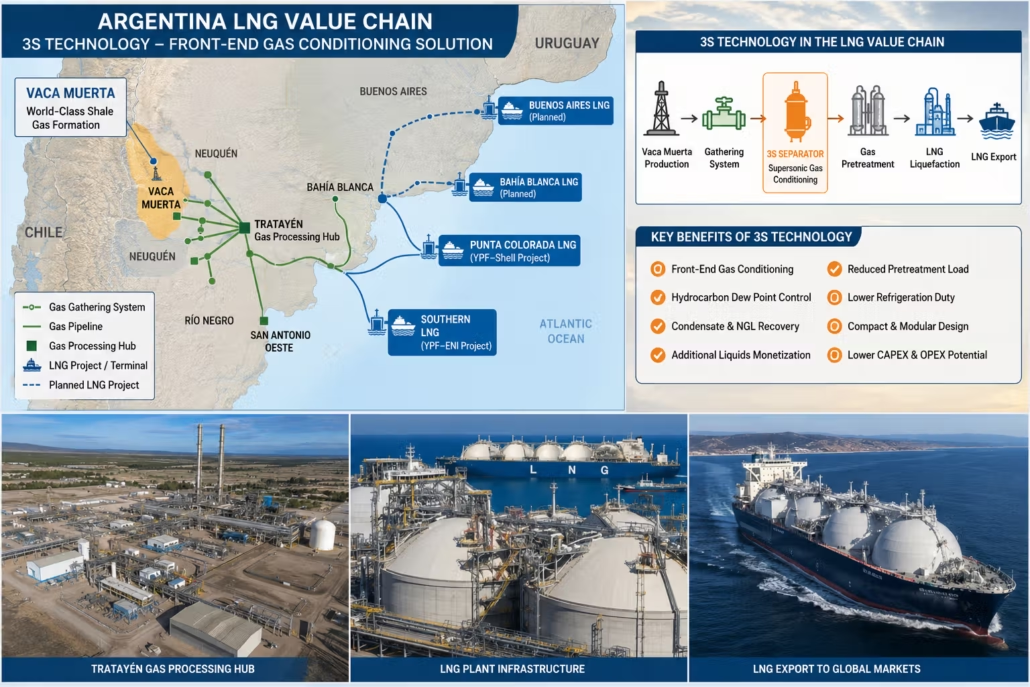
A modern, compact, and high-efficiency solution — the 3S Supersonic Separation Unit — offers an opportunity to recover valuable C3–C4 fractions currently lost in the gas stream, unlocking both operational and financial benefits.

Optimizing Offshore Gas Processing in Guyana and Suriname Developments

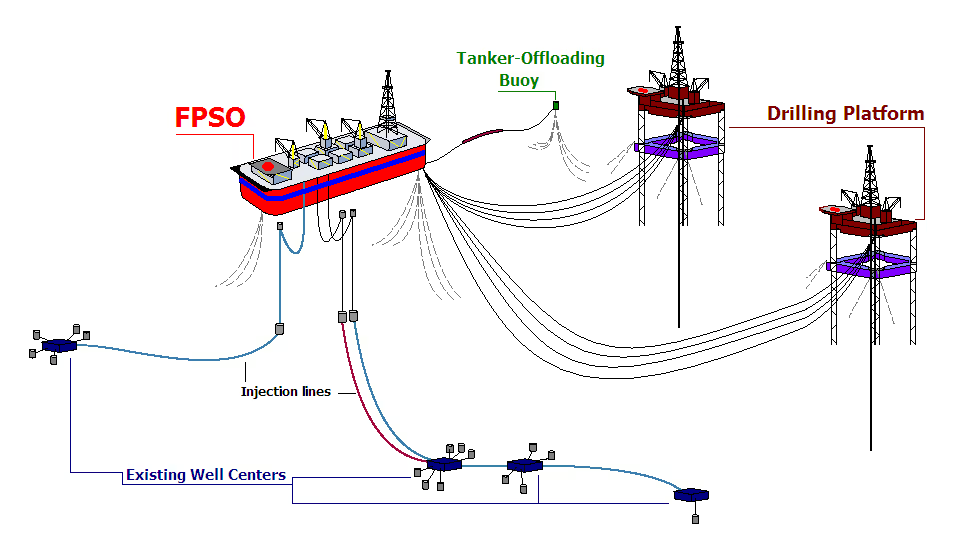
Floating Production Storage and Offloading units (FPSOs) have become the preferred development solution for deepwater oil and gas projects worldwide. As offshore production expands across the Guyana–Suriname Basin, efficient FPSO gas conditioning and processing systems are emerging as a critical factor determining production reliability, emissions performance, and operational economics.

Major offshore operators including ExxonMobil, TotalEnergies, APA Corporation, Hess Corporation, CNOOC, and PETRONAS are deploying multiple FPSOs to process hydrocarbons directly offshore, creating growing demand for compact and energy-efficient gas treatment technologies.

3S Supersonic Separation Technology provides an advanced approach to FPSO gas conditioning designed specifically for modern offshore constraints.

FPSO gas conditioning | 3S Supersonic Separation
FPSO Gas Conditioning

Why FPSO Gas Conditioning Is Becoming a Critical Offshore Challenge

FPSOs must simultaneously perform oil separation, gas treatment, compression, storage, and export operations within strict limitations related to:

  • topside weight capacity
  • available deck space
  • power generation limits
  • emissions compliance requirements
  • operational safety offshore

In developments offshore Guyana and Suriname, associated gas volumes continue to increase as production expands and new reservoirs with higher gas-oil ratios are brought online.

Traditional FPSO gas processing systems typically rely on:

  • large separation vessels
  • refrigeration systems
  • Joule-Thomson expansion units
  • multi-stage compression trains

These systems significantly increase topside complexity, CAPEX, and energy consumption.

As a result, operators increasingly seek compact FPSO gas conditioning solutions capable of improving efficiency without expanding platform footprint.


Offshore Developments Driving Demand for FPSO Gas Conditioning

Guyana – Stabroek Block FPSO Fleet Expansion

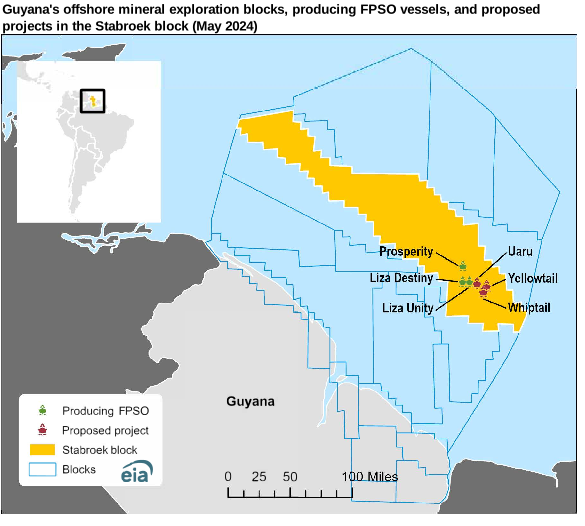
The Stabroek Block, operated by ExxonMobil with partners Hess Corporation and CNOOC, represents one of the world’s fastest-growing offshore production hubs.

Key FPSO developments include:

Guyana's oil production comes from three floating production, storage, and offloading (FPSO) vessels: Liza Destiny, Liza Unity, and Prosperity.
FPSO Gas Conditioning Technology for Offshore Projects | 3S Supersonic Separation 6

FPSOs constructed primarily by SBM Offshore process large volumes of associated gas requiring conditioning prior to reinjection or export.

As production capacity approaches one million barrels per day, gas handling efficiency increasingly determines overall facility performance.


Suriname – GranMorgu Offshore Development

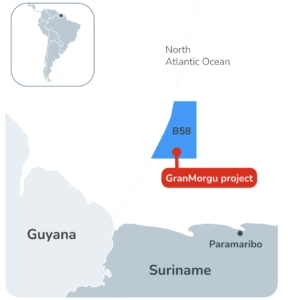
Suriname’s GranMorgu Project (Block 58), operated by TotalEnergies and APA Corporation with national partner Staatsolie, introduces the country’s first large-scale deepwater FPSO production system.

Suriname GranMorgu Project Block 58 1
FPSO Gas Conditioning Technology for Offshore Projects | 3S Supersonic Separation 7

The project targets:

  • low-emission offshore production
  • zero routine flaring
  • full associated gas reinjection

Achieving these objectives requires advanced FPSO gas treatment solutions capable of minimizing compression demand and stabilizing gas quality under varying reservoir conditions.


Supersonic Separation: A New Approach to FPSO Gas Conditioning

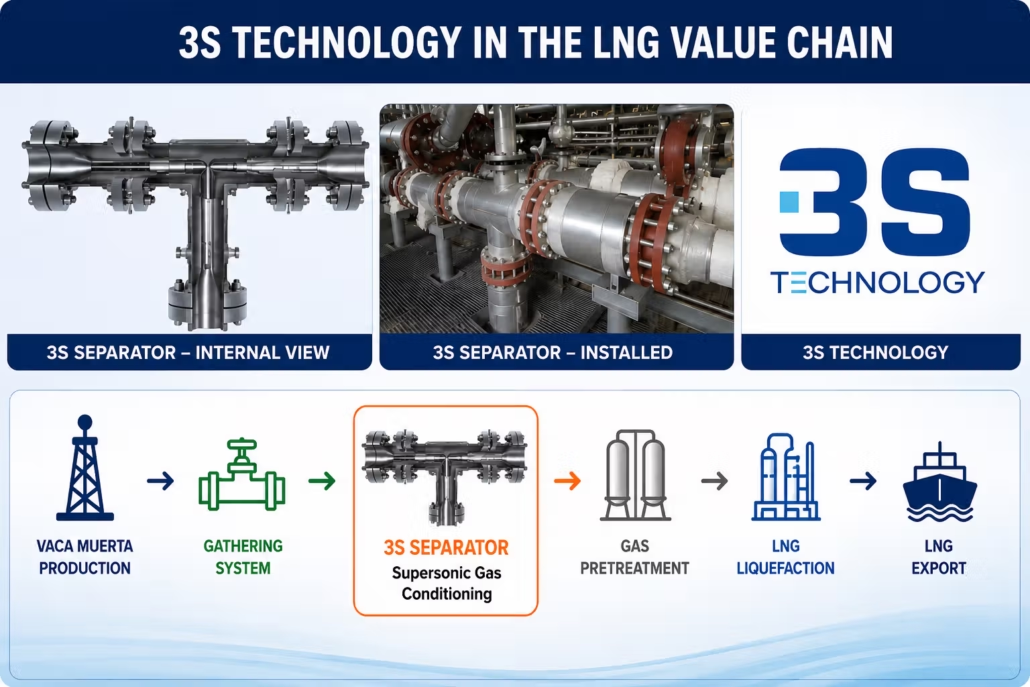
3S Technology — M-ost Ltd — 3S Separator

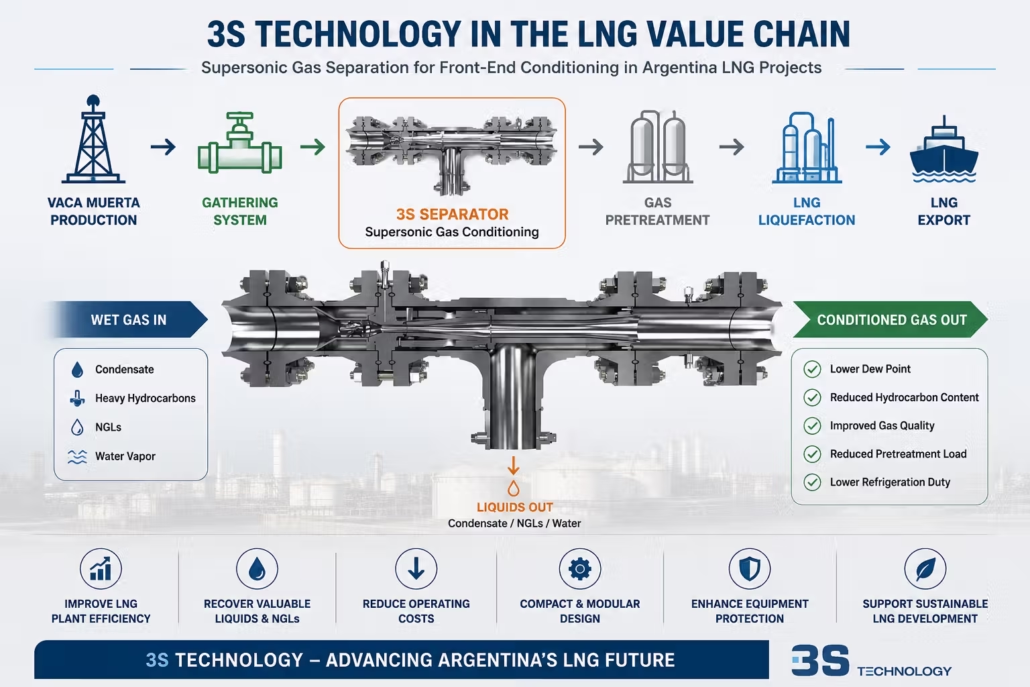
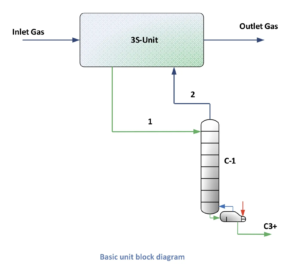
3S Supersonic Separation Technology applies controlled supersonic flow expansion to rapidly cool and separate hydrocarbons and water directly within a compact static device.

Unlike conventional offshore gas treatment equipment, the 3S separator operates:

  • without rotating machinery
  • without chemical additives
  • without external refrigeration systems

The process simultaneously performs:

  • hydrocarbon dew point control
  • condensate removal
  • water separation
  • inlet gas stabilization

This makes the technology particularly suitable for offshore FPSO integration.


Key Applications of 3S Technology on FPSOs

FPSO Inlet Gas Treatment

Installed upstream of conventional processing trains, 3S Technology systems remove liquids early in the process stream, enabling:

  • reduced separator loading
  • improved compressor efficiency
  • stabilized gas flow conditions
  • increased overall FPSO throughput

This approach supports both newbuild FPSOs and brownfield upgrades.


FPSO Debottlenecking and Production Expansion

Gas handling limitations frequently restrict oil production capacity during later project phases.

Supersonic separation enables operators to:

Debottlenecking through compact modular installation minimizes shutdown duration and retrofit complexity.


Associated Gas Reinjection Optimization

Associated gas reinjection remains essential for emissions reduction and reservoir pressure maintenance.

3S gas conditioning improves reinjection performance by:

  • removing condensates prior to compression
  • reducing compressor energy consumption
  • improving gas stability
  • lowering operational emissions intensity

These benefits align directly with offshore decarbonization strategies adopted across new Guyana and Suriname projects.


Subsea Tie-Back Gas Stabilization

Future developments within the basin increasingly rely on satellite tiebacks connected to existing FPSO hubs.

Supersonic gas separation supports long-distance multiphase transport by:

  • stabilizing gas composition
  • preventing liquid carryover
  • improving flow assurance
  • enabling extended tieback distances

This allows operators to maximize infrastructure utilization while reducing capital expenditure.


Advantages of Supersonic Separation for Offshore FPSO Projects

Compared with conventional FPSO gas conditioning systems, 3S Technology offers:

  • Extremely compact equipment footprint
  • Significant topside weight reduction
  • Minimal pressure loss
  • No rotating equipment maintenance
  • Reduced power consumption
  • Lower lifecycle operating costs

These characteristics make supersonic separation particularly attractive for deepwater developments where space and energy efficiency directly influence project economics.


Strategic Outlook for FPSO Gas Processing in the Guyana–Suriname Basin

The Guyana–Suriname offshore region represents a long-term production growth cycle comparable to early Brazilian pre-salt developments.

Multiple FPSOs remain in FEED, EPC execution, or future planning stages, meaning technology selection windows remain open for gas conditioning optimization.

Operators increasingly prioritize technologies capable of:

  • improving offshore efficiency
  • reducing emissions
  • enabling flexible future expansion
  • minimizing topside complexity

Supersonic gas separation provides a scalable solution aligned with these evolving offshore requirements.


Conclusion

As offshore developments in Guyana and Suriname continue expanding, efficient FPSO gas conditioning will play a decisive role in maximizing production performance and minimizing environmental impact.

3S Supersonic Separation Technology offers operators a compact, energy-efficient, and offshore-optimized solution for next-generation FPSO gas processing and debottlenecking applications.


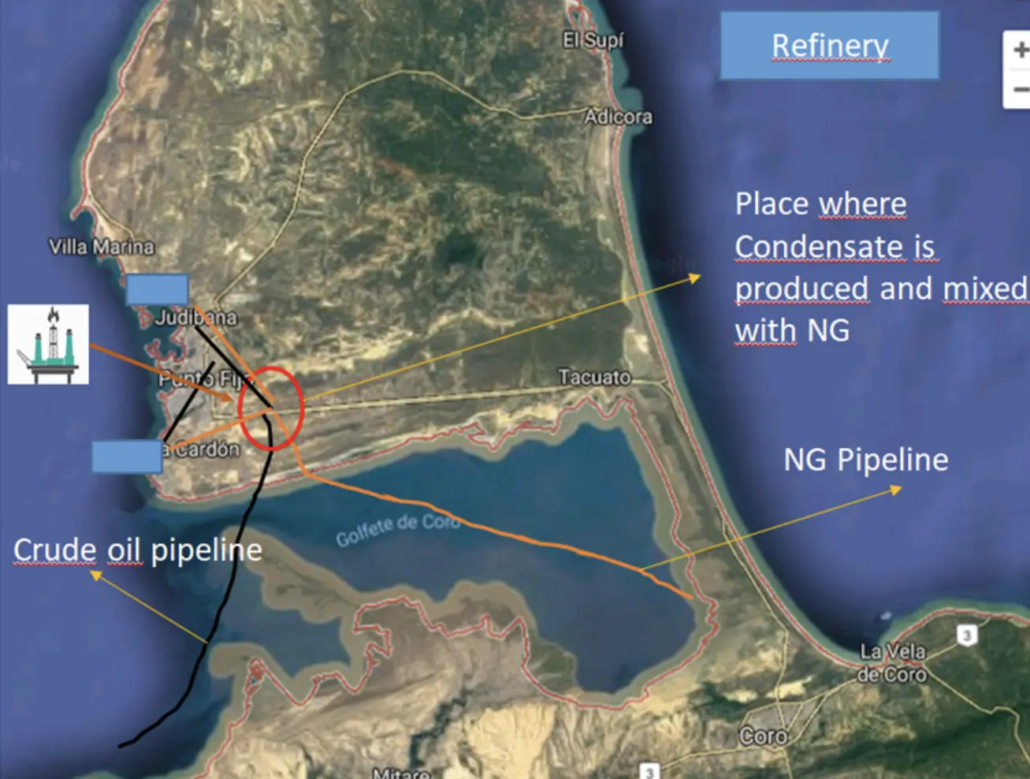
Venezuela’s Paraguaná Refining Complex (CRP), which includes the Amuay and Cardón refineries, remains a cornerstone of the country’s energy system. These facilities have opportunity and capacity to process offshore crude while receiving significant volumes of associated gas and natural gas through dedicated pipelines. However, the current gas-handling configuration leaves valuable C3–C4 fractions unrecovered.

Paraguana Refining Complex 2
Supersonic Gas Separation (3S Technology): A Strategic Opportunity for PDVSA at Amuay and Cardón 10

The implementation of a modern, compact and highly efficient solution — the 3S Supersonic Separation Unit — would offer PDVSA (Petróleos de Venezuela) a unique opportunity to recover these liquids and significantly improve refinery economics.


1. Current Gas Handling at CRP: Lost C3+ Value

After onshore processing, associated gas undergoes only basic condensate separation before being blended with mainland natural gas and routed to Amuay and Cardón. No fractionation or NGL recovery is performed, resulting in large volumes of propane, butane and heavier hydrocarbons remaining in the gas, unused and unmonetized.

RefineryGas Flow (MMSCFD)Gas Flow (m³/h)Annual Volume (million m³)
Amuay4955,125481
Cardón5865,250573

This means Venezuela is currently losing thousands of tons per year of valuable C3–C4 products due to the absence of an efficient separation technology at refinery inlet points.


2. 3S Supersonic Separation: A Modern and Reliable Solution

As documented in various technical materials by 3S-MOST, the 3S Supersonic Separator operates by:

  • Accelerating gas through a Laval nozzle into supersonic velocity
  • Inducing instant cooling and condensation of C3–C4 and water
  • Separating liquids through a cyclonic mechanism without moving parts
  • Operating as a compact, static, low-maintenance system

This makes it ideal for refineries like Amuay and Cardón, where reliability, footprint, and CAPEX discipline are critical factors.

Key Technical Advantages

  • High C3–C4 recovery even with variable inlet compositions
  • No rotating equipment — minimal maintenance
  • No chemical additives or regeneration systems
  • Compact skid-mounted configuration
  • Suitable for unattended or remote operation

3. Recovery Potential for Amuay and Cardón

Based on the engineering evaluation, installation of 3S units (3S SuperSonic Swirl Separator) at both refineries would unlock significant NGL recovery:

LocationInlet Flow (MMSCFD)Treated Flow (MMSCFD)C3–C4 Recovery (kg/h)C3–C4 Annual Recovery (tons/year)
Amuay4948.12,41821,180
Cardón5856.92,86225,071

Total C3–C4 recovery => approximately 46,000 tons per year …

… offering a strong return even under conservative pricing assumptions.


4. Cost Estimate

Given the recovery volumes, such systems featuring 3S Supersonic Separator would typically pay for themselves rapidly.


5. Strategic Impact for Venezuela (Amuay & Cardón)

Economic Benefits

  • Monetization of large C3–C4 volumes
  • Increased LPG availability
  • Improved refinery efficiency and stability

Operational Benefits

  • Cleaner and more predictable fuel gas for refinery operations
  • Reduced risk of liquids carryover
  • Lower stress on compressors and furnaces

National Benefits

  • Reduced flaring and emissions
  • Strengthening of domestic fuel supply chains
  • Modernization of a key national asset

Conclusion

The integration of 3S Supersonic Gas Separation at the Amuay and Cardón refineries offers a compelling opportunity for Petróleos de Venezuela (PDVSA) and for Venezuela’s energy sector. With high recovery efficiency, low maintenance requirements and a flexible financing structure, this technology represents an immediately actionable step toward restoring and enhancing national refining capability.

  • Total C3–C4 recovery => approximately 46,000 tons per year …

In a context where every recovered barrel and every recovered molecule counts, 3S technology stands out as a practical, efficient and high-impact investment for the Paraguaná Refining Complex.


Ready to Transform Your Gas Stream into Value?

Share your latest gas analysis (composition, pressure, flow ± variability) and your processing goals. We’ll return a 3S Technology tailored block flow diagram, footprint, and payback snapshot for your site.